Intime Komplizenschaft
Installation
2026
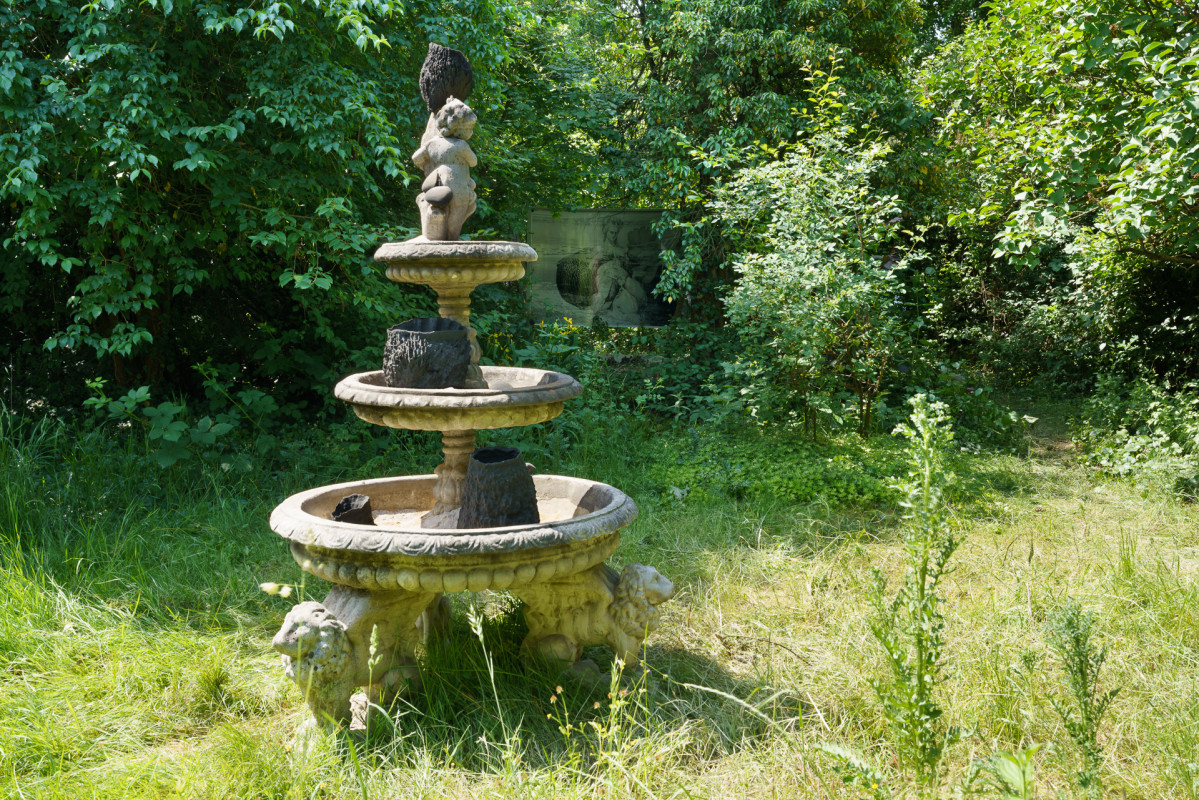
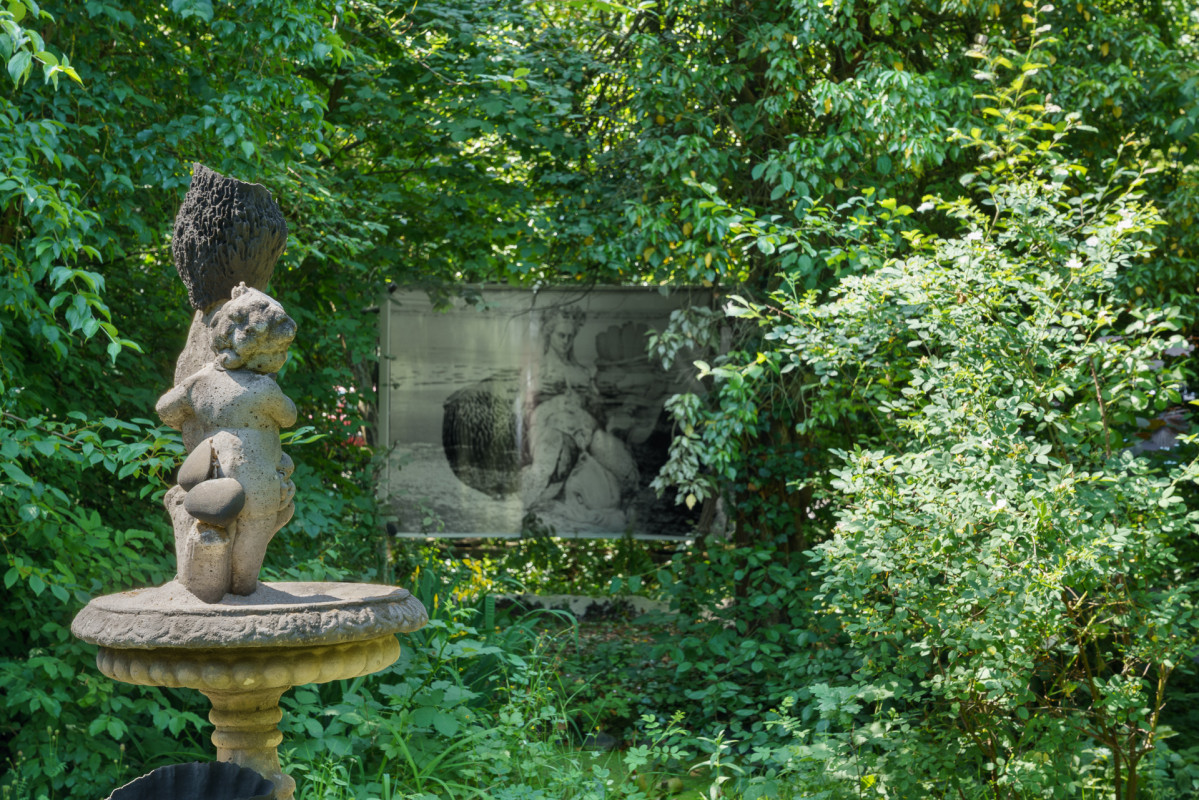
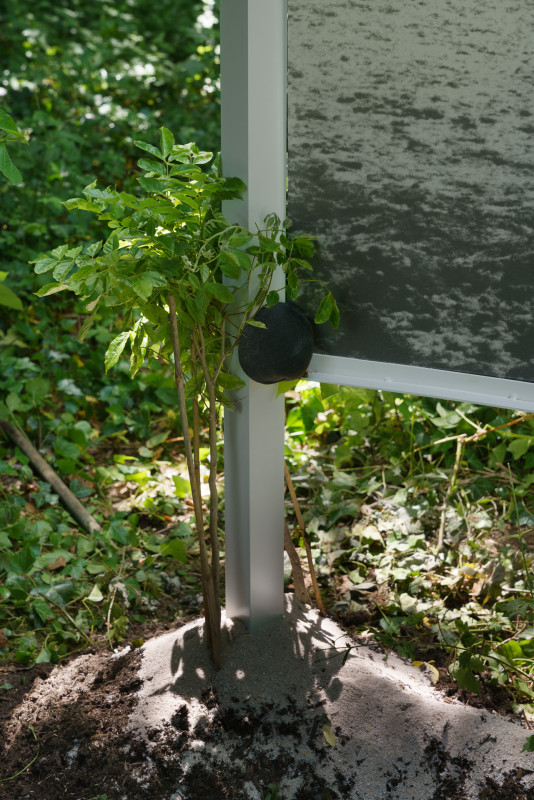
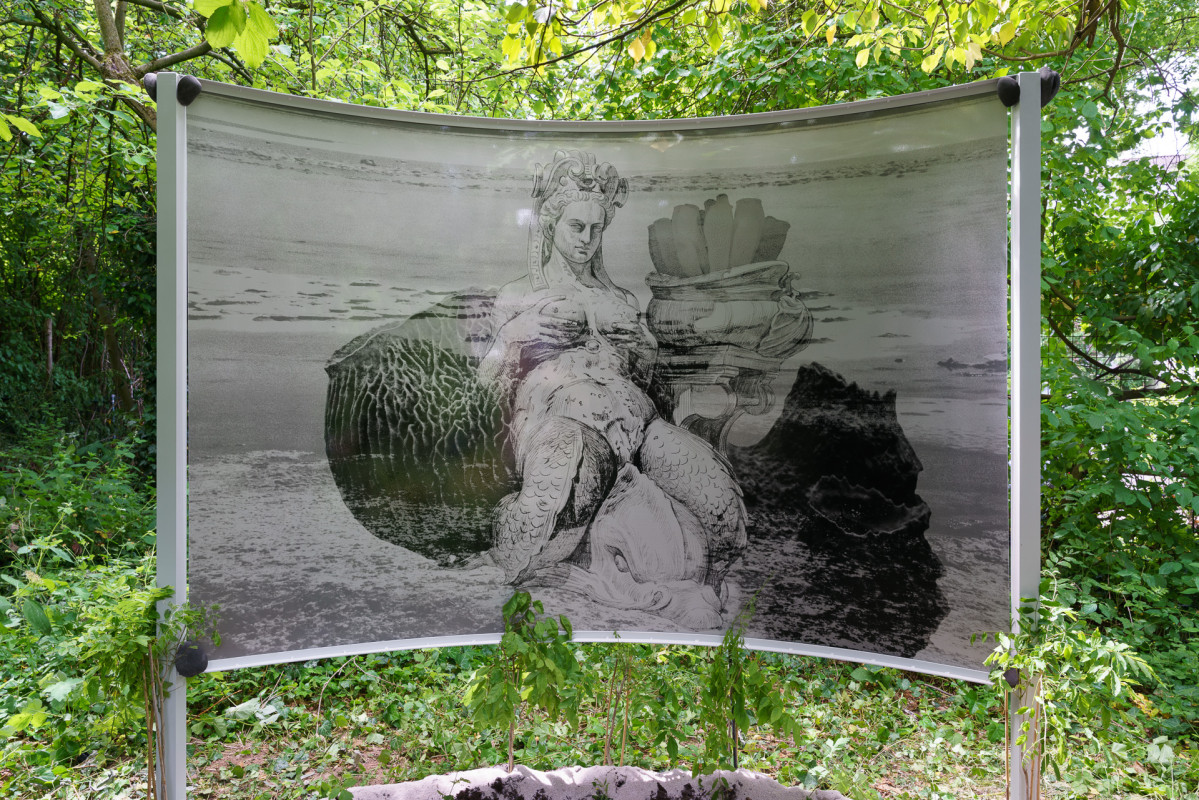
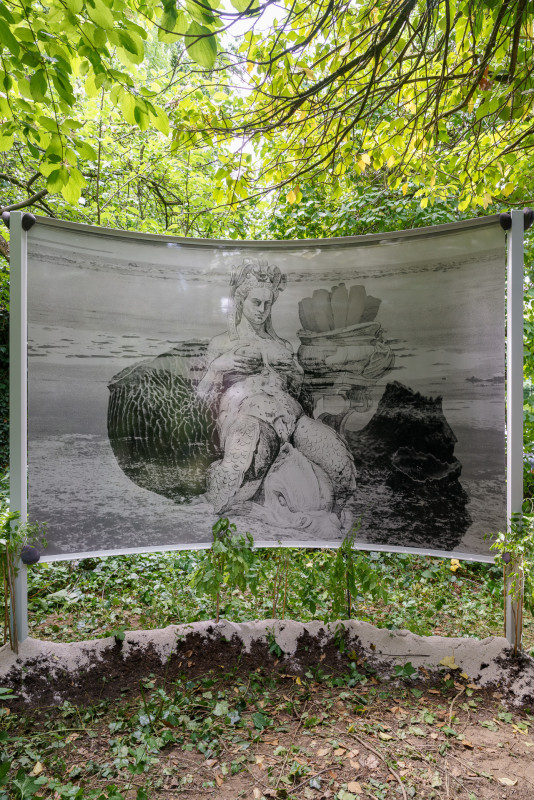
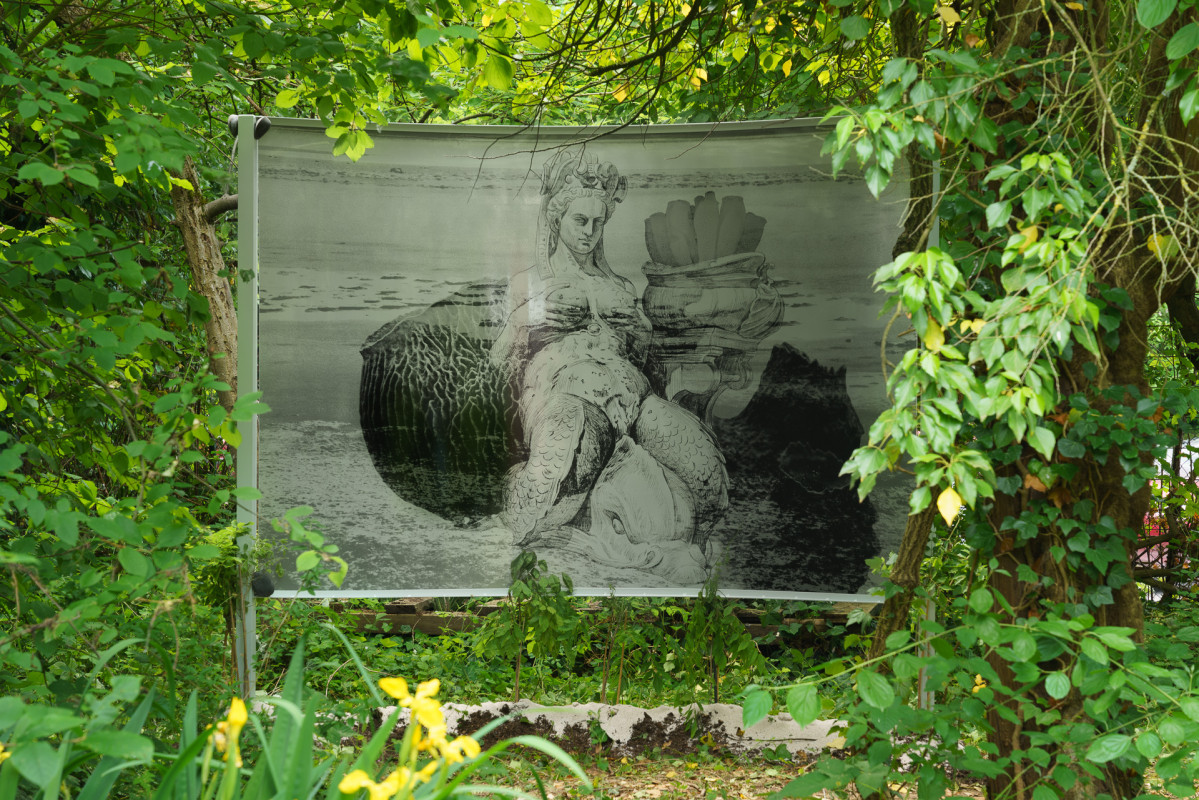
UV Druck und Gravur auf gebogenen Aluminium, beidseitig bedruckt
180x215x50cm
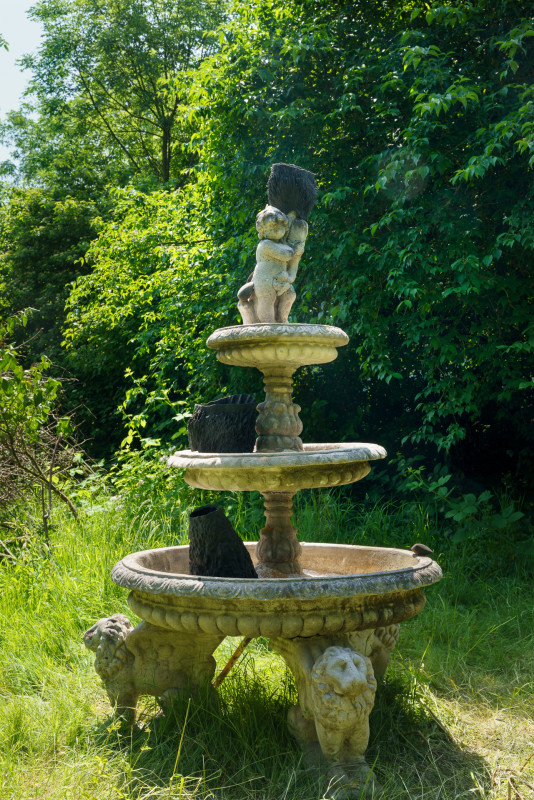
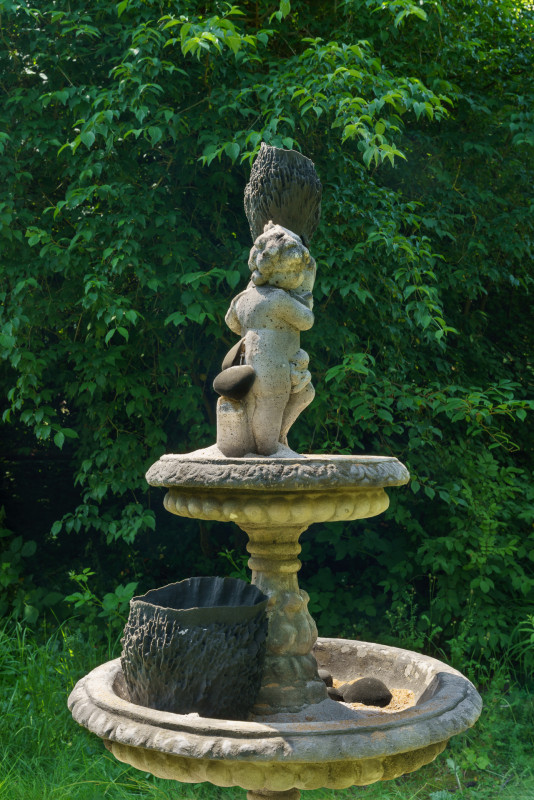
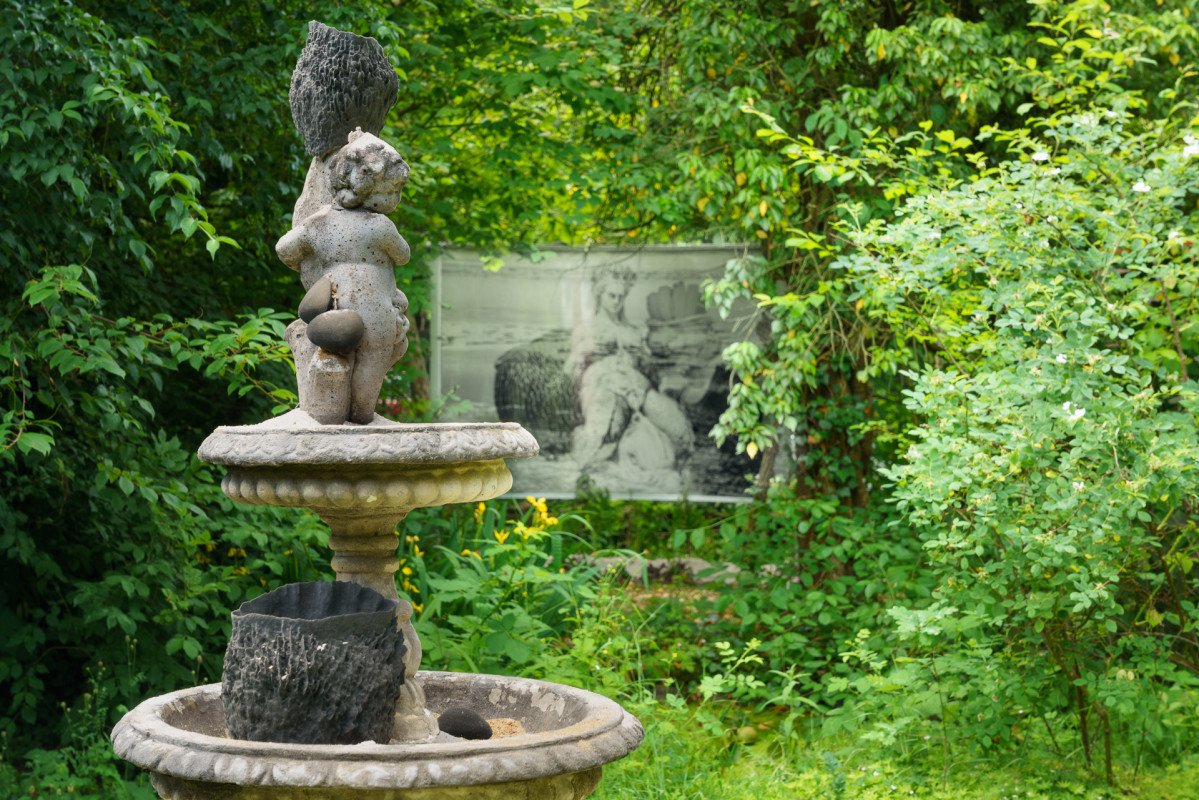
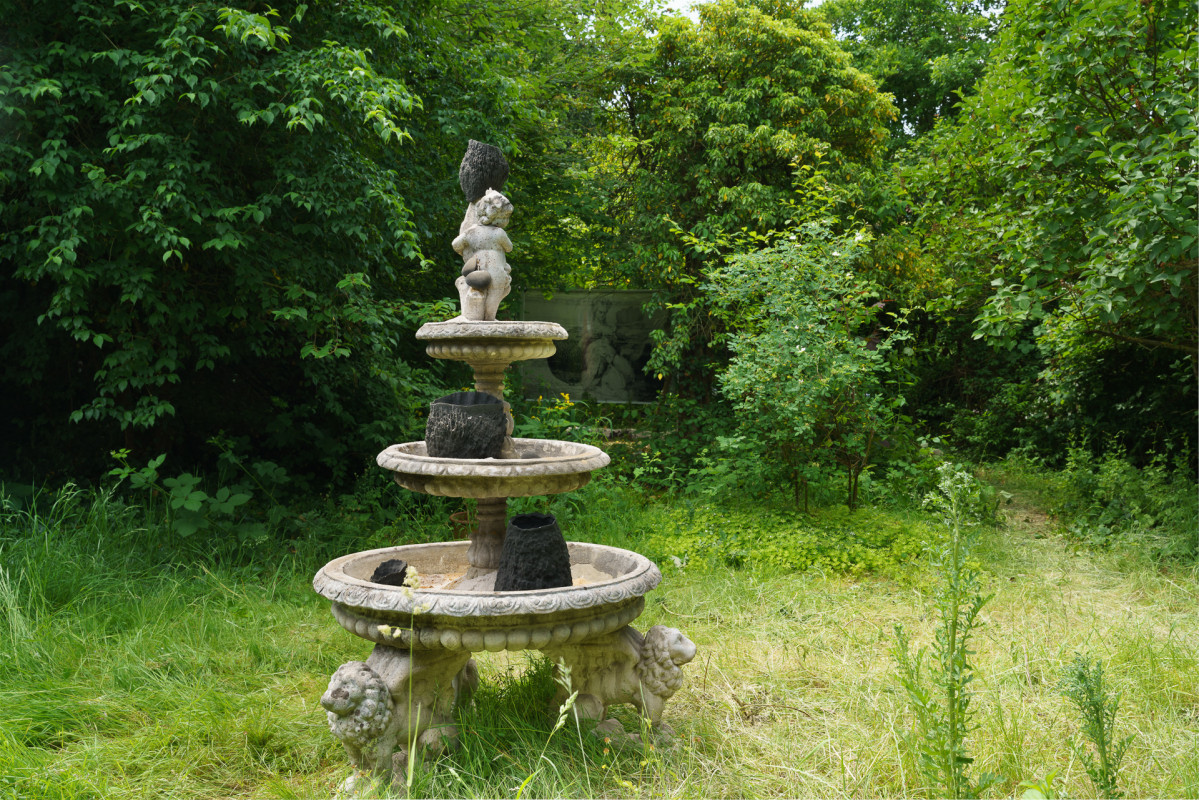
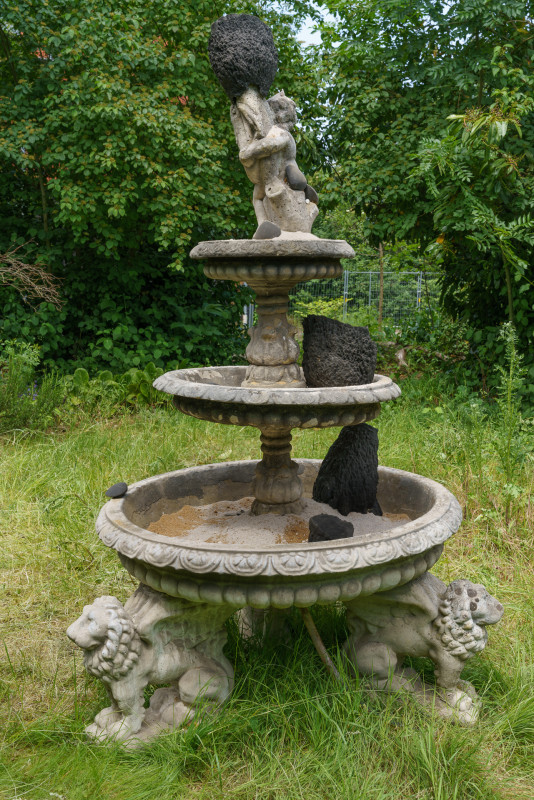
Betonbrunnen mit Skulpturen (Sand-3d-Druck)
170x60x60cm
Fotografie: Jana Buch
Ansichten und Text zu der Ausstellung 'Wittern', Kunstverein Simultanhalle
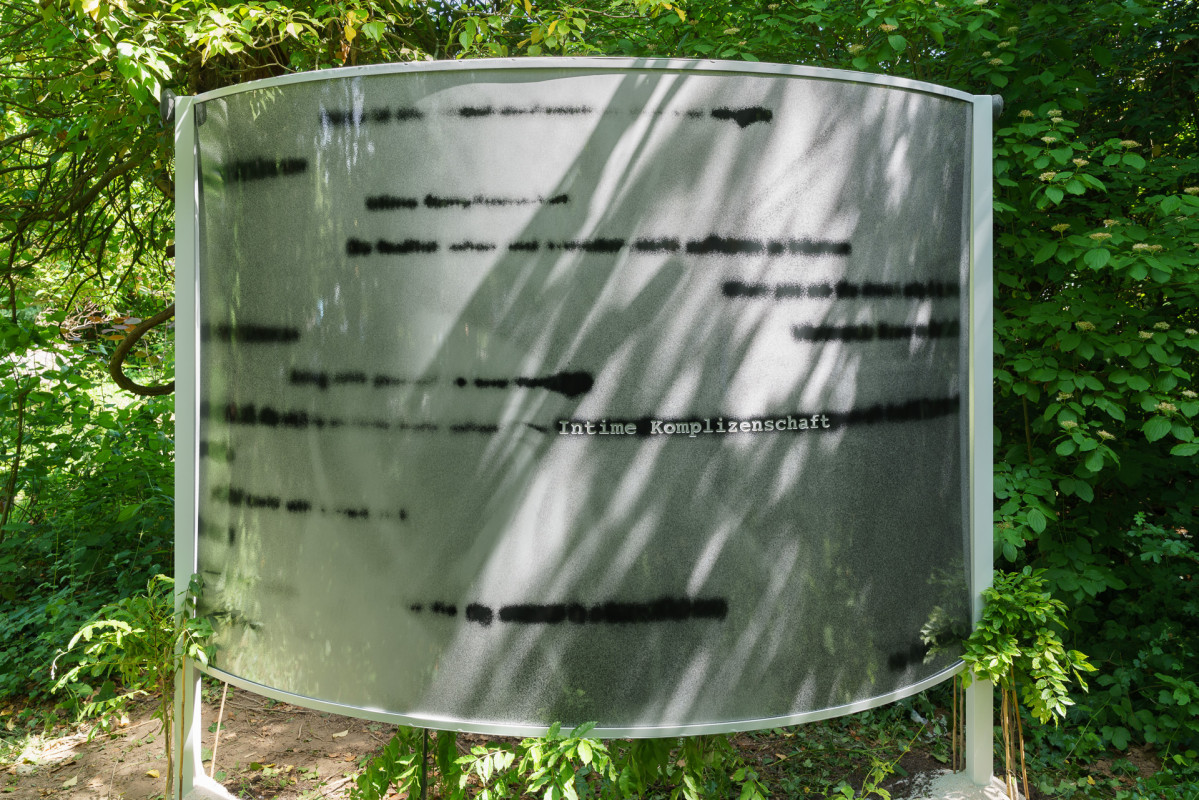
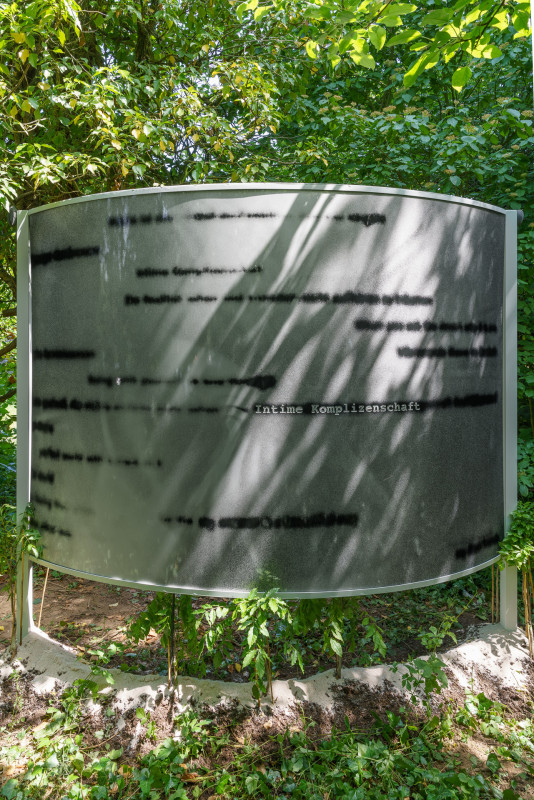
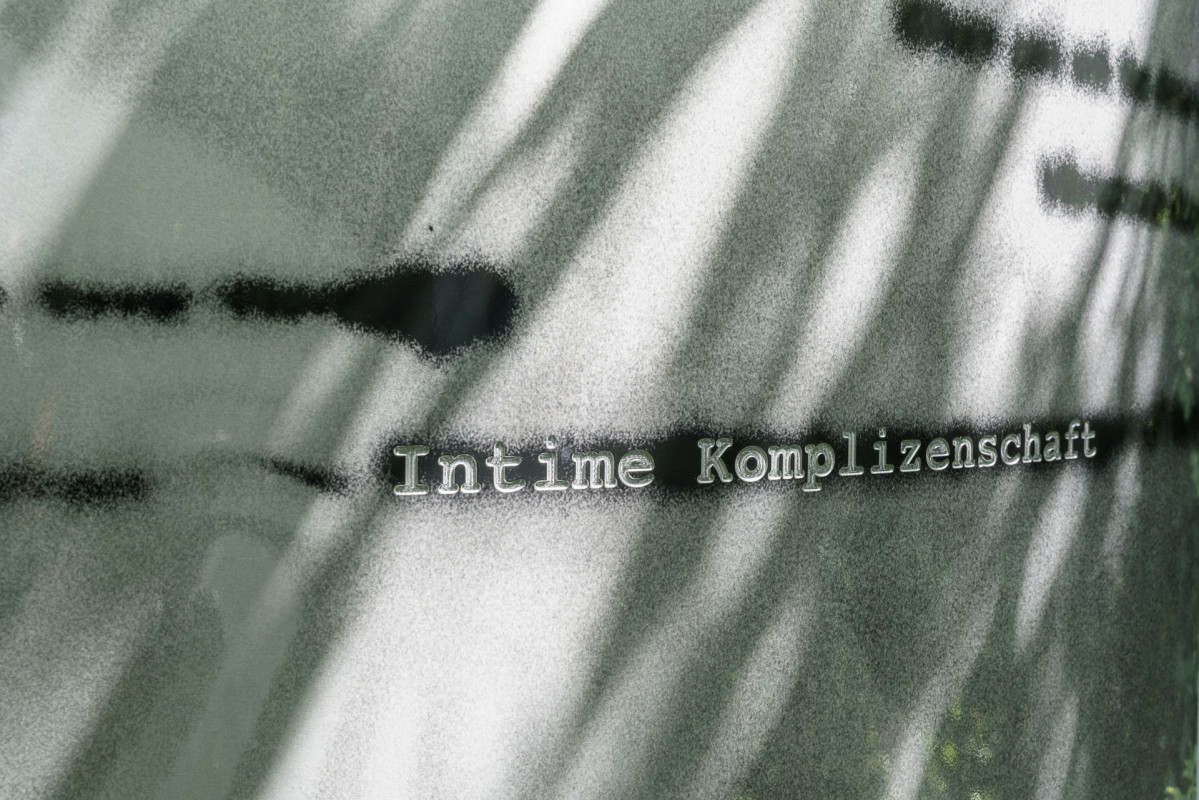
Die Arbeit Intime Komplizenschaft verbindet künstlerische Praxis, ökologische Reflexion und feministische Theorie. Dies wird vor allem in der Darstellung von Brunnenfiguren und der Vorstellung einer gleichberechtigten Koexistenz zwischen menschlichen und nichtmenschlichen Lebensformen deutlich. Dabei versteht sie die einzelnen Bildakteur*innen im Sinne des Archipels bei Edouard Glissant - ein systemfreies und hierarchieloses Miteinander mit der Rückbesinnung und Fokussierung auf Intuition und der verbindenden Einheit ohne Vereinheitlichung. Auch der Titel Intime Komplizenschaft lässt sich als künstlerische und gesellschaftliche Strategie des Zusammenlebens verstehen - inspiriert wurde Nadine Karl zu diesem Titel durch die Arbeit Jamais Vu, 2026, einer Videoarbeit des Künstlerduos Hedda Roman. Auf einem gebogenen Aluminiumträger befindet sich eine fotografische Collage: Im Hintergrund das „Sandmeer“ der chilenischen Atacama-Wüste, ein zentrales Motiv und Forschungsgrundlage Nadine Karls. Die Region steht für den Widerspruch zwischen extremer Trockenheit und intensiver Rohstoffausbeutung, insbesondere durch den Lithiumabbau, der als Sinnbild hyperkapitalistischer Bedürfnisse, ökologische Zerstörung vorantreibt. Überlagert wird die Landschaft mit Mikroorganismen, genauer Urzeitschwämmen – Symbole einer „tiefen Zeit“, die sich menschlichen Maßstäben entzieht und als radikale Gegenposition zu kapitalistischen Temporalitäten gelesen werden kann.
Als drittes Element sehen wir eine weiblich gelesene Brunnenfigur, Brunnen lassen sich nach Michel Foucault als räumliche Dispositive verstehen. Die Figürlichkeiten sind Ausdruck von historischen und internalisierten Blickregimen. Nicht umsonst handelt es sich bei den Brunnenfiguren um Nymphen und Venusdarstellungen, die die traditionellen Zuschreibungen der Frau auf Fruchtbarkeit, Reinheit, Natur oder Verführung festschreiben soll und somit im Sinne des “male gaze" normiert, ästhetisiert und auch sexualisiert wird. Bei Nadine Karls Arbeit wird die Figur jedoch von ihrer dekorativen Randerscheinung gelöst und übernimmt eine aktive Bildsubjektrolle ein und stellt sich mit den Organismen der Koralle und Schwämme auf eine hierarchische Stufe. Ganz im Sinne der neuen ökofeministischen Theorie. Die Materialwahl des Aluminiums unterstreicht dies: Durch Passivierung bildet sich eine schützende Oxidschicht, die besonders für die Präsentation im Außenraum relevant ist.
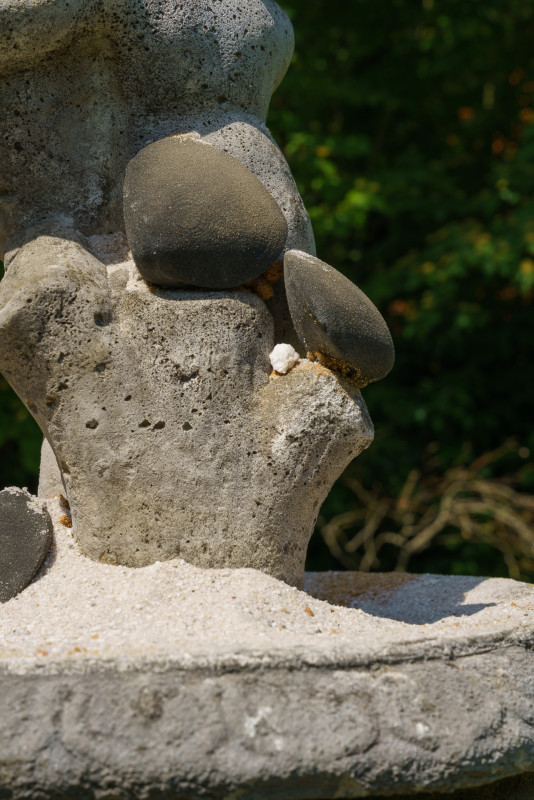
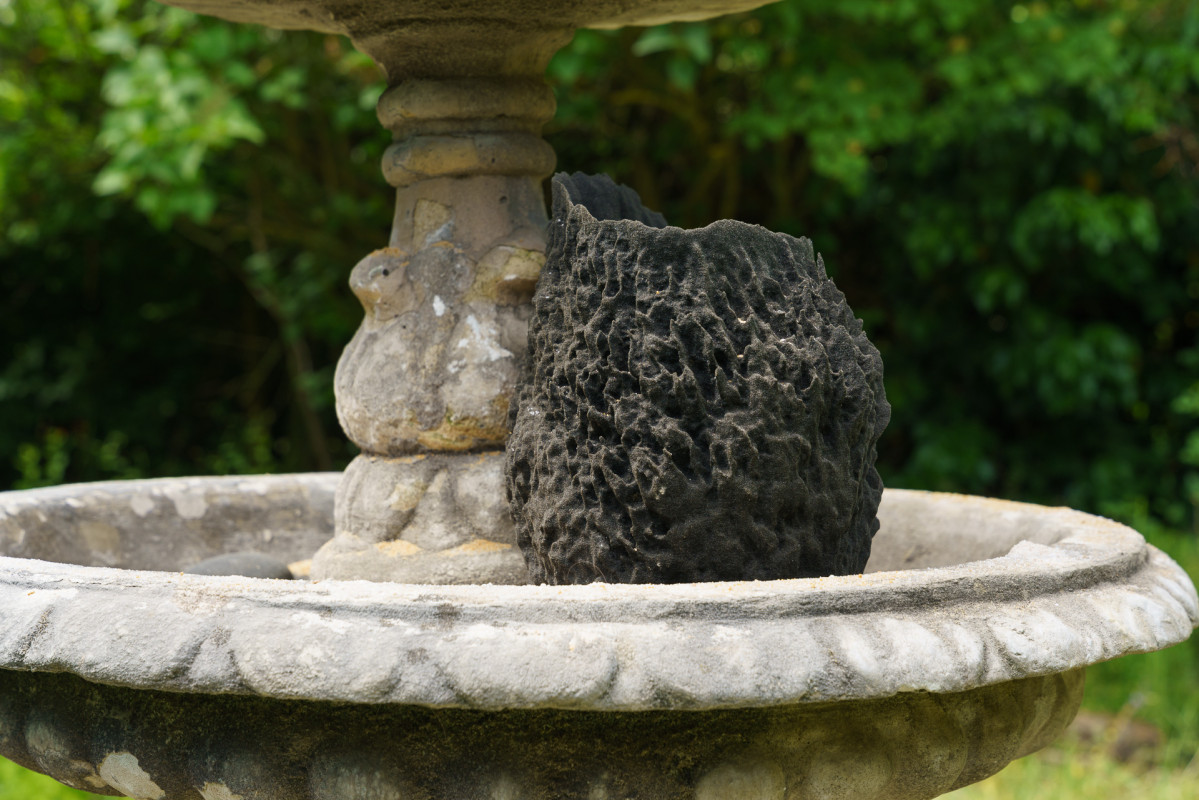
Vorgelagert ist eine Brunnenskulptur, die die bildliche Konzeption des Verwitterns aufgreift. Der Brunnen – ein gefundenes Objekt – wurde von Nadine Karl mit aus Sand und Bindemittel abgeformten Objekten, welche Riesenschwämme und Islandmuscheln darstellen, ergänzt. Durch die Materialkombination werden sie schwarz gefärbt und erhärtet. UV-Strahlung löst diese Reaktion mit der Zeit wieder auf, sodass das Objekt durch Witterung erhellt und in seinen ursprünglichen Zustand zurückkehrt, ohne die Erhärtung aufzulösen. So schafft Karl ein neues ökologisches Konstrukt und eine neue Lesart von Material und Figuren.
Text von Jessica Schiefer
Installation
2026
UV print and engraving on curved aluminium, double-sided print
180 × 215 × 50 cm
Concrete fountain with sculptures (3D-printed sand)
170 × 60 × 60 cm
Photography by Jana Buch
Installation views and exhibition text from Wittern, presented at the Simultanhalle.
The work Intime Komplizenschaft (Intimate Complicity) weaves a tapestry of artistic practice, ecological reflection, and feminist theory. This is most evident in Karls references to fountain figures and her vision of an equitable coexistence between human and non-human life forms. The individual agents within her images are understood through the lens of Édouard Glissant's concept of the Archipelago which describes a non-hierarchical, unstructured mode of community that relies on intuition and embraces connective unity without enforcing uniformity. The title Intimate Complicity itself can be read as both an artistic and social strategy for cohabitation. The title was inspired by Jamais Vu, 2026, a video work by the artist duo Hedda Roman. At the centre of the site specific installation stands a photographic collage, mounted on a curved Aluminium support. In the background of the collage we perceive the "sand sea" of the Chilean Atacama Desert, a recurring motif and central site of research for Karl. The regionembodies a stark contradiction: extreme aridity alongside the intense extraction of raw materials, particularly lithium mining, which serves as an emblem of hypercapitalist desire driving ecologicaldestruction. Layered over this background we see microorganisms, prehistoric sponges, specifically, symbols of a "deep time" that exceeds human scales of comprehension and can be read as a radicalcounterpoint to the temporalities of capitalism. Among these organisms we see a female coded fountain figure. According to Michel Foucault, fountains can be understood as spatial dispositifs and their figurative traditions are expressions of historically inscribed and internalized scopic regimes. It is therefore no coincidence that fountain figures of past eras have often taken the form of nymphs and Venus figures, representations that fix womanhood to conventional attributes of fertility, purity, nature, or seduction. Fountain figures of the past aestheticized and sexualized the female form according to a subjugating male gaze. In Karl's work, however, the figure is released from its decorative, peripheral role. It assumes an active position as a pictorial subject, placing itself on equal footing and in kinship with the coral ornaments and sponge organisms; in the spirit of new ecofeminist theory. The choice of Aluminium reinforces this: through passivation, the metal develops a protective oxide layer, making it particularly suited to outdoor presentation and exposure to the elements.
As counterpiece to the collage, across the pond, stands a fountain sculpture that embodies the concept of weathering. The fountain, a found object, has been supplemented by Karl with cast forms made from sand and a binding material, representing giant sponges and ocean quahog clams. The combination of materials renders them black and hardened. Over time, UV radiation gradually reverses this reaction, brightening the object through exposure and returning it toward its original state, yet without dissolving the hardened form itself. In doing so, Karl creates a new ecological construct and a new way of reading both material and figure.
Text by Jessica Schiefer